
When you are looking to buy a new western saddle, the first and most important step is knowing how to measure your horse. Can you buy a western saddle without measuring your horse? No, because a poorly fitting saddle can hurt your horse and make riding unsafe. This guide will walk you through the simple steps needed for accurate horse back measurements so you can find the proper saddle fit for horse comfort and performance.
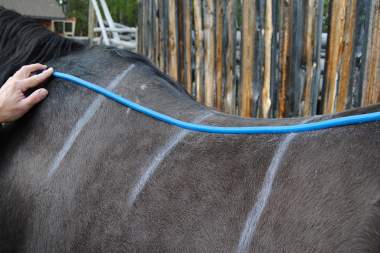
Image Source: www.rodnikkel.com
Why Precise Measurement Matters for Western Saddle Fitting
A good saddle fit is key. It is not just about the seat size you need. It is mostly about the tree, which supports the horse’s back. If the tree is too wide or too narrow, it pinches or bridges the spine. This causes pain, stops your horse from moving well, and can lead to long-term back problems. Knowing how to find the right saddle tree size guide starts with good measurements. This process helps in determining horse size for saddle needs accurately.
Tools You Will Need for Measuring
Gather these simple items before you start. You do not need fancy tools.
- A flexible tape measure: A soft cloth or fiberglass tape works best. Metal tapes can be hard to bend around curves.
- A helper (optional but useful): Someone to hold the horse still can make things easier.
- A clean, dry horse: Sweaty or muddy fur can throw off your measurements.
- A calm environment: Work when your horse is relaxed and standing square.
Step 1: Preparing Your Horse and Setting Up
Before you take any numbers, your horse needs to be standing correctly. This ensures the measurements reflect how the saddle will sit during a ride.
Positioning the Horse
- Stand Square: Ask your horse to stand on level ground. All four legs should be straight underneath the body. This is called standing “square.”
- Relaxation is Key: Make sure your horse is relaxed. A tense horse often has muscles bunched up, which changes the shape of the back. Do not measure right after riding or after hard work.
- No Saddle or Pad: Remove any blankets, pads, or existing tack. You need to measure the bare back.
Step 2: Finding the Wither Height Measurement Horse
The wither height measurement horse is important for general size reference, though the gullet width is more crucial for the tree fit.
How to Measure Height
- Locate the Withers: Find the highest point of the shoulder blades where the neck meets the back. This is the highest point of the horse’s back line.
- Use a Measuring Stick: Have your helper hold a long, straight object (like a level yardstick) vertically right at the highest point of the wither.
- Measure Down: Measure straight down from the highest point of the wither to the ground.
- Record: Write this number down in inches. This gives you the horse’s height.
Step 3: Measuring the Back Length for Saddle Placement
This measurement dictates where the saddle will sit and how long the skirt of the western saddle fitting should be. We need to find the points of the shoulder and the point just before the loin begins.
Locating Key Landmarks
- Shoulder Point: Feel for the prominent bone at the front of the shoulder, where the leg joins the body.
- Last Rib/Loin Junction: Find the last rib. Move your hand backward until you feel the back drop slightly or the muscles change just before the croup (rump area) begins. This spot is where the back ends for saddle support.
Taking the Back Length
- Start Point: Place the tape measure exactly on the point of the shoulder.
- Follow the Contour: Run the tape along the curve of the back, following the muscle line, but keep it flat against the spine area. Do not press down hard enough to indent the muscle.
- End Point: Stop where the back starts to slope down sharply toward the loin or croup.
- Record: Note this length in inches. This tells you the approximate length needed for the saddle bars to sit correctly, ensuring the saddle doesn’t hit the hip joint or sit too far forward onto the shoulder.
Step 4: The Critical Gullet Measurement (Determining Tree Width)
This is the most vital step for western saddle fitting regarding the tree. The gullet is the channel underneath the saddle that rests over the horse’s spine. Getting this wrong causes pinching.
Fathoming Horse Back Anatomy: The Withers Area
The width of the horse’s back right behind the shoulder blades determines the gullet size. This area is where the most pressure will be exerted.
Measuring the Gullet Span
For most accurate measuring horse for custom saddle work, professional fitters use specialized tools. However, you can get a very good estimate using a flexible tape measure:
- Locate the Base of the Withers: Start at the very base where the neck meets the back muscles, just behind the bony structure of the shoulder.
- Measure Across the Spine: Measure straight across the horse’s back, from the middle of one side of the shoulder muscle mass to the middle of the other side. This gives you the width of the horse’s frame at that crucial point.
- Measure the Slope (If Necessary): For very prominent or flat withers, you might need an angle measurement. Have your helper hold a stiff, flat board (like a ruler) vertically across the horse’s back at the wither base. Then, measure from the top of this board down to the horse’s side, meeting the angle where the saddle tree would sit. This secondary measurement helps account for steeply angled withers.
Using the Measurement for Tree Selection
This measurement relates directly to the saddle tree size guide. Trees are typically categorized as:
- Narrow
- Semi-Quarter Horse (QH)
- Full Quarter Horse (F-QH)
- Wide/Draft
A common starting point is: if your horse is very narrow or high-withered, start looking at Narrow or Semi-QH trees. If your horse has flat, broad shoulders, start with Full QH or Wide trees.
Table 1: General Guide for Tree Width Based on Conformation
| Horse Type / Conformation Trait | Typical Tree Recommendation |
|---|---|
| Very Muscled, Broad Chest (e.g., large stock horse) | Full Quarter Horse (F-QH) or Wide |
| Average Stock Horse (Most Western Breeds) | Semi Quarter Horse (QH) |
| Narrow Chest, High Withers (e.g., Arabs, narrow breeds) | Narrow |
| Draft or Extremely Broad Breeds | Draft/Extra Wide |
Step 5: Assessing Slope and Rock (The “Bar Angle”)
The shape of the horse’s back—whether it’s flat or slopes sharply—is as important as the width. This is often called the bar angle.
Interpreting Equine Conformation Measurement
If the back slopes sharply down from the withers, you need a tree with a steeper angle. If the back is very flat, you need a flatter tree.
- Use a Carpenter’s Level (Optional but helpful): Place a small level across the top of the shoulder area where the saddle will sit. Then, place another level across the level spot just behind the saddle area (where the bars end). The difference in angle indicates the slope.
- Visual Check: Stand to the side. Does the horse’s back look like a steep hill or a gentle plain? Steep hill equals a more angled tree. Gentle plain equals a flatter tree.
This analysis is crucial for proper saddle fit for horse longevity, especially when measuring horse for custom saddle specifications.
Step 6: Measuring for Seat Size (For Rider Comfort)
While tree fit is for the horse, seat size is for the rider. This doesn’t use horse back measurements directly but is part of the overall selection process.
Seat Sizing Basics
Western seats are measured from the nail heads at the front of the swell to the center back of the cantle.
- Rider Preference: The rider needs enough room to sit comfortably without being cramped, but not so much room that they slide around.
- General Guidelines:
- Riders under 5’4″ often use 14-inch or 15-inch seats.
- Average adult riders (5’5″ to 5’10”) often use 16-inch seats.
- Taller or larger riders often use 17-inch or 18-inch seats.
Note: Seat size does not change the tree width needed for the horse. A 17-inch seat can still be built on a Narrow tree if your horse is narrow.
Special Considerations: Barrel Saddle Fit Measurements
If you are fitting a barrel saddle fit measurements differ slightly because barrel saddles are designed for extreme contact and close movement.
Key Differences in Barrel Saddle Measurement
Barrel saddles are often built higher up on the shoulder to allow the rider to move forward quickly.
- Shoulder Clearance: Ensure the front of the saddle sweep allows the shoulder to move a full 45–50 degrees backward without the bars hitting the shoulder blade edge.
- Shorter Bar Length: Barrel saddles often have shorter skirts than roping or trail saddles. Confirm that the bars still cover the muscle structure from the wither base to the end of the last rib. If the bars are too short, they concentrate pressure at the ends, which is painful.
Advanced Check: Confirming Fit After Measurement
Once you have your numbers and have selected a saddle based on the saddle tree size guide, the real test is putting it on the horse.
The Trial Fitting Process
- Use a Bare Saddle (If Possible): If you are buying new, try to test a bare saddle (no pad first).
- Pad Placement: Place your chosen saddle pad. Make sure the pad sits well behind the shoulder blade and extends past the bars of the saddle toward the rear. The pad should never touch the horse’s elbows or wither structure.
- The Sit Test: Does the saddle sit level? A saddle that tips forward (nose down) usually means the tree is too narrow or the withers are too flat for the tree chosen. A saddle that tips backward (cantle down) usually means the tree is too wide or the horse has significant muscle behind the shoulder.
The Finger Test (Assessing Gullet Space)
This is the best way to check for pinch points once the saddle is on the horse with a pad.
- Front Check: Gently slide your fingers between the saddle’s pommel (swell) and the horse’s neck/withers area. You should be able to slide 2–3 fingers in easily, but they should meet a little resistance. If you can easily slide your whole hand, the gullet is likely too wide. If you cannot get two fingers in, it is too narrow.
- Spine Check: While the horse is standing still, run your hand lightly down the channel (gullet) between the bars down the horse’s back. You should feel no pressure on the spine itself. The bars should rest only on the muscle mass on either side.
Deciphering Horse Back Anatomy for Fit
The horse’s back is not a flat surface. It changes shape constantly with movement and muscle development. A good measurement accounts for these natural variations.
Key Muscles and Structures
- Longissimus Dorsi: These are the long back muscles that run alongside the spine. The saddle bars rest on these muscles. If the bars are too narrow, they ride up onto the spine bone (the vertebrae). If they are too wide, they bridge over the muscles, creating pressure points at the front and back of the bars.
- Rhomboideus: These muscles lie under the front of the saddle, near the shoulder blade. A saddle that is too narrow or doesn’t allow free movement here will restrict the shoulder. This affects gait and causes bucking or resistance when moving forward.
Good equine conformation measurement relies on feeling these muscle groups, not just measuring bone points.
Summary Checklist for Accurate Measurement
Use this list to ensure all parts of determining horse size for saddle are covered.
| Measurement Area | What to Check For | Result Recorded |
|---|---|---|
| Wither Height | Highest point of the shoulder/neck junction. | Inches |
| Back Length | Point of shoulder to where the back muscle drops off. | Inches |
| Gullet Width | Width across the back at the base of the withers. | Inches (Used for Tree Selection) |
| Slope/Rock | Visual or tool check of the back angle. | Steep/Flat/Medium |
| Rider Size | Rider’s inseam and seat preference. | Seat Size (e.g., 16 inches) |
Frequently Asked Questions (FAQ)
What if my horse has prominent or very flat withers?
Prominent (pointy) withers require a tree that offers more relief over that bony point, often achieved with a gullet that flares out more aggressively at the front, or sometimes by using a thicker, shaped pad to bridge the gap. Flat withers need a wider, flatter tree to distribute weight evenly across the broad shoulder area, preventing the saddle from rocking down onto the spine tips.
How often should I remeasure my horse for a saddle?
You should remeasure your horse if you notice any significant change in their condition. This includes:
1. Gaining or losing a lot of weight (getting fat or getting skinny).
2. Starting a new, intense fitness regimen (building muscle).
3. Aging (older horses often lose muscle mass along the topline).
4. After an injury that changes their way of moving.
Generally, check the fit annually, even if you do not remeasure everything.
Do I need to measure for a barrel saddle fit measurements if I already have a trail saddle fit?
Yes, slightly. Barrel saddles are designed for closer contact and different angles of movement. While the tree width might be similar if the horse is the same, the sweep and length of the bars might differ significantly, especially if you are moving from a longer-skirted endurance saddle to a short-skirted barrel saddle. Always check the shoulder clearance specific to the barrel design.
How do I measure for a custom saddle if I don’t have professional tools?
For a measuring horse for custom saddle, try the “template method.” Have a helper hold a piece of heavy, flexible cardboard or thick paper firmly against the horse’s back behind the shoulder blades, mimicking the shape of the intended saddle bar. Trace the outline, ensuring you capture the highest point (wither line) and the lowest points where the bar meets the side. This template can be sent to a custom saddle maker for reference.